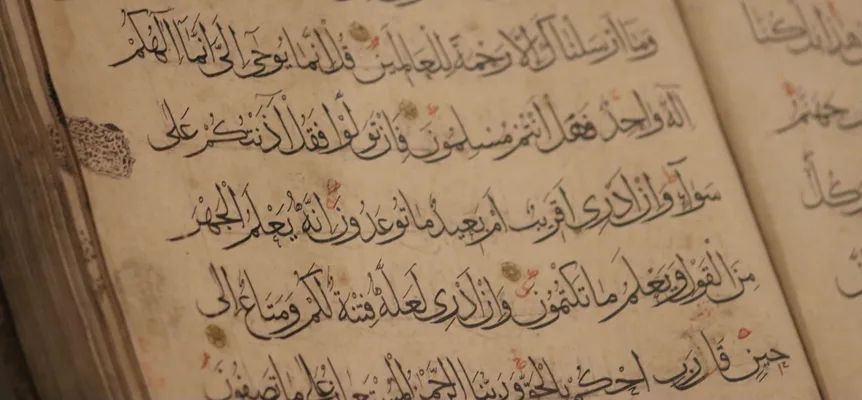
Hebrew is the easier of the two for an English speaker. The US Foreign Service Institute puts Hebrew in its Category III, about 44 weeks of full-time study, and Arabic in Category IV, about 88 weeks. Choose Arabic anyway if you want the bigger audience: roughly 411 million native speakers against about 5 million for Hebrew.
| What you are comparing | Arabic | Hebrew |
|---|---|---|
| Time to working proficiency (FSI) | Category IV: 88 weeks, 2,200 class hours | Category III: 44 weeks, 1,012 class hours |
| Native speakers | About 411 million, all varieties | About 5 million, with 3.3 million second-language speakers (2018) |
| Family | Semitic, Central branch | Semitic, Central branch, Canaanite subgroup |
| Letters | 28, mostly joined to each other, up to four shapes each | 22, written separately, five with a separate final form |
| Direction | Right to left | Right to left |
| Short vowels in normal text | Left out; marks only in the Quran, poetry and children's books | Left out; vowel points only in prayer books, poetry and children's books |
| Sounds new to English speakers | About six, including ع (ʿayn) and ح (ḥāʾ), plus four emphatic consonants | Two: kh and a throaty r. Modern speech dropped most of the old throat sounds |
| Verb system | Root plus patterns; ten forms in common use | Root plus patterns; seven binyanim |
| Noun case endings | Three, in formal Modern Standard Arabic | None |
| Written vs spoken | Modern Standard Arabic for writing, a regional dialect for talking | One Modern Hebrew for both |
Sources: the Foreign Service Institute's language learning timelines, and speaker figures from Wikipedia's Arabic and Hebrew language articles, which cite Ethnologue.
How words are written on this page: Arabic uses ʿ for ع, ʾ for hamza, a dot under ḥ ṣ ḍ ṭ ẓ for the throat and emphatic letters, and ā ī ū for long vowels. Hebrew is written as Israelis say it today, with kh for both ח and כ, ts for צ, and ʿ where the letter ע stands, even though most speakers no longer pronounce it.
Which is easier to learn, Arabic or Hebrew?
Hebrew is easier, and it takes about half the study time. The FSI timelines estimate how long a full-time student, at 23 class hours and 17 hours of self-study a week, takes to reach professional speaking and listening. Hebrew sits with Greek and Russian at 44 weeks and 1,012 class hours. Arabic sits with Mandarin, Japanese and Korean at 88 weeks and 2,200 hours.
Four things account for most of that gap, and Hebrew is lighter on each.
- Pronunciation. Modern Hebrew merged the old throat sound ḥ into kh and turned ʿayin into a glottal stop that often disappears, according to Wikipedia's article on Modern Hebrew phonology. Arabic kept them all, plus four emphatic consonants.
- Arabic learners need Modern Standard Arabic to read and a dialect to talk. Hebrew has no such split.
- Formal Arabic marks nouns for case. Hebrew nouns never change for case.
- Hebrew letters stand apart. Arabic letters join and change shape by position.
Hebrew still has its own hard parts. Ordinary text leaves the vowels out, as Arabic does, so a beginner reads slowly until the vocabulary is in place. The verb system is root-and-pattern too. Think of it as a lighter version of the same kind of language. If you want to see where the Arabic hours actually go, we rate each skill in our skill-by-skill answer to whether Arabic is hard to learn.
Are Arabic and Hebrew related?
Yes. Arabic and Hebrew are both Semitic languages, and Wikipedia's overview of the Semitic languages groups them in the same Central Semitic branch. Hebrew belongs to the Canaanite subgroup with ancient Phoenician. Aramaic is the third large living member of the family.
Neither language comes from the other. They are more like cousins with a shared grandparent, Proto-Semitic, which nobody wrote down. Hebrew was written first: the earliest written Hebrew dates to the 10th century BCE, while Arabic appears in writing between the 1st and 4th centuries CE. Hebrew then stopped being spoken day to day sometime between 200 and 400 CE, and it was revived as a spoken language in the late 19th century. Arabic has been spoken without a break the whole time.
Related does not mean mutually understandable. A Hebrew speaker and an Arabic speaker cannot hold a conversation each in their own language. What they share is a skeleton of roots, built into words the same way, and an alphabet in the same order.
How do the Arabic and Hebrew alphabets compare?
Each of the Hebrew alphabet's 22 letters has an Arabic counterpart in the same position. Arabic then has six more letters that Hebrew lacks. The proof is the old order of the Arabic alphabet, called abjad. In that order, each letter's number value matches the Hebrew letter in the same position up to 400, according to Wikipedia's article on abjad numerals. At that point Hebrew stops and Arabic carries on with its six extra letters.
| Value | Hebrew | Name and sound | Arabic | Name and sound | Same sound today? |
|---|---|---|---|---|---|
| 1 | א | alef, silent or a catch in the throat | ا | alif, ā or a catch in the throat | Yes |
| 2 | ב | bet, b or v | ب | bāʾ, b | Partly: Arabic has no v |
| 3 | ג | gimel, g | ج | jīm, j | No (g in Egyptian Arabic) |
| 4 | ד | dalet, d | د | dāl, d | Yes |
| 5 | ה | he, h | ه | hāʾ, h | Yes |
| 6 | ו | vav, v, or the vowels o, u | و | wāw, w or ū | No: v against w |
| 7 | ז | zayin, z | ز | zāy, z | Yes |
| 8 | ח | khet, kh | ح | ḥāʾ, a breathy ḥ from the throat | No |
| 9 | ט | tet, t | ط | ṭāʾ, a heavy emphatic ṭ | No |
| 10 | י | yod, y or the vowel i | ي | yāʾ, y or ī | Yes |
| 20 | כ | kaf, k or kh | ك | kāf, k | Partly |
| 30 | ל | lamed, l | ل | lām, l | Yes |
| 40 | מ | mem, m | م | mīm, m | Yes |
| 50 | נ | nun, n | ن | nūn, n | Yes |
| 60 | ס | samekh, s | س | sīn, s | Yes |
| 70 | ע | ʿayin, usually silent today | ع | ʿayn, a tight sound from the throat | No |
| 80 | פ | pe, p or f | ف | fāʾ, f | Partly: Arabic has no p |
| 90 | צ | tsadi, ts | ص | ṣād, a heavy emphatic ṣ | No |
| 100 | ק | qof, k | ق | qāf, q from deep in the throat | No |
| 200 | ר | resh, a throaty r | ر | rāʾ, a rolled r | No |
| 300 | ש | shin or sin, sh or s | ش | shīn, sh | Yes, as sh |
| 400 | ת | tav, t | ت | tāʾ, t | Yes |
Hebrew has no letter of its own for the six Arabic additions. In shared words, each of those Arabic sounds turns up as one of the 22 old letters, and the swap is regular enough to learn as a rule:
| Arabic letter | Name and sound | Becomes in Hebrew | Example pair |
|---|---|---|---|
| ث | thāʾ, th as in think | ש sh | thalātha → shalosh, three |
| خ | khāʾ, kh | ח kh | khamsa → khamesh, five |
| ذ | dhāl, th as in this | ז z | dhahab → zahav, gold |
| ض | ḍād, a heavy emphatic ḍ | צ ts | arḍ → erets, land |
| ظ | ẓāʾ, a heavy emphatic ẓ | צ ts | ẓill → tsel, shade |
| غ | ghayn, a gargled gh | ע ʿ | ghurāb → ʿorev, raven |
One more rule matters more than any of these. The letters pair up by alphabet position, but sounds in real words do not always follow that pairing. Arabic s (س) usually answers Hebrew sh (ש): salām and shalom, sana and shana, samiʿa and shamaʿ. That one swap explains eight rows of the table below. For the full set of Arabic letter shapes, use our Arabic alphabet chart with every positional form.
Which words do Arabic and Hebrew share?
Arabic and Hebrew share hundreds of basic words through their common ancestor. The 30 below are words a beginner meets in the first months. Every row was checked against Wiktionary. The link goes to the entry that names the other language's word as a cognate, or traces both words to the same Proto-Semitic ancestor.
| Meaning | Arabic | Transliteration | Hebrew | Transliteration | Consonants (Arabic ↔ Hebrew) | Wiktionary |
|---|---|---|---|---|---|---|
| peace | سَلَام | salām | שָׁלוֹם | shalom | s-l-m ↔ sh-l-m | salām (Arabic) |
| day | يَوْم | yawm | יוֹם | yom | y-w-m ↔ y-w-m | yom (Hebrew) |
| night | لَيْلَة | layla | לַיְלָה | layla | l-y-l ↔ l-y-l | layla (Arabic) |
| house | بَيْت | bayt | בַּיִת | bayit | b-y-t ↔ b-y-t | bayit (Hebrew) |
| earth, land | أَرْض | arḍ | אֶרֶץ | erets | ʾ-r-ḍ ↔ ʾ-r-ts | arḍ (Arabic) |
| head | رَأْس | raʾs | רֹאשׁ | rosh | r-ʾ-s ↔ r-ʾ-sh | rosh (Hebrew) |
| ear | أُذُن | udhun | אֹזֶן | ozen | ʾ-dh-n ↔ ʾ-z-n | udhun (Arabic) |
| tongue | لِسَان | lisān | לָשׁוֹן | lashon | l-s-n ↔ l-sh-n | lisān (Arabic) |
| blood | دَم | dam | דָּם | dam | d-m ↔ d-m | dam (Hebrew) |
| king | مَلِك | malik | מֶלֶךְ | melekh | m-l-k ↔ m-l-kh | melekh (Hebrew) |
| name | اِسْم | ism | שֵׁם | shem | s-m ↔ sh-m | ism (Arabic) |
| death | مَوْت | mawt | מָוֶת | mavet | m-w-t ↔ m-v-t | mawt (Arabic) |
| water | مَاء | māʾ | מַיִם | mayim | m-ʾ ↔ m-y-m | māʾ (Arabic) |
| gold | ذَهَب | dhahab | זָהָב | zahav | dh-h-b ↔ z-h-v | zahav (Hebrew) |
| shade, shadow | ظِلّ | ẓill | צֵל | tsel | ẓ-l-l ↔ ts-l-l | tsel (Hebrew) |
| raven, crow | غُرَاب | ghurāb | עוֹרֵב | ʿorev | gh-r-b ↔ ʿ-r-v | ghurāb (Arabic) |
| he laughed | ضَحِكَ | ḍaḥika | צָחַק | tsakhak | ḍ-ḥ-k ↔ ts-kh-k | ḍaḥika (Arabic) |
| father | أَب | ab | אָב | av | ʾ-b ↔ ʾ-v | ab (Arabic) |
| mother | أُمّ | umm | אֵם | em | ʾ-m ↔ ʾ-m | umm (Arabic) |
| daughter, girl | بِنْت | bint | בַּת | bat | b-n-t ↔ b-t | bint (Arabic) |
| Arabic: meat. Hebrew: bread | لَحْم | laḥm | לֶחֶם | lekhem | l-ḥ-m ↔ l-kh-m | laḥm (Arabic) |
| year | سَنَة | sana | שָׁנָה | shana | s-n-h ↔ sh-n-h | sana (Arabic) |
| donkey | حِمَار | ḥimār | חֲמוֹר | khamor | ḥ-m-r ↔ kh-m-r | khamor (Hebrew) |
| he remembered | ذَكَرَ | dhakara | זָכַר | zakhar | dh-k-r ↔ z-kh-r | dhakara (Arabic) |
| he heard | سَمِعَ | samiʿa | שָׁמַע | shamaʿ | s-m-ʿ ↔ sh-m-ʿ | samiʿa (Arabic) |
| camel | جَمَل | jamal | גָּמָל | gamal | j-m-l ↔ g-m-l | gamal (Hebrew) |
| soul, self | نَفْس | nafs | נֶפֶשׁ | nefesh | n-f-s ↔ n-f-sh | nefesh (Hebrew) |
| liver | كَبِد | kabid | כָּבֵד | kaved | k-b-d ↔ k-v-d | kaved (Hebrew) |
| three | ثَلَاثَة | thalātha | שָׁלוֹשׁ | shalosh | th-l-th ↔ sh-l-sh | shalosh (Hebrew) |
| five | خَمْسَة | khamsa | חָמֵשׁ | khamesh | kh-m-s ↔ kh-m-sh | khamesh (Hebrew) |
Read down the consonant column and the rules from the letter tables show up again and again. Arabic s becomes Hebrew sh in peace, tongue, name, year, heard and soul. Arabic dh becomes z in ear, gold and remembered. Arabic b after a vowel softens to Hebrew v in father, raven, gold and liver. The laḥm row is the odd one out: the same word means meat in Arabic and bread in Hebrew. Wiktionary puts that down to different diets in the Arabian Peninsula and the Fertile Crescent.
Grammar: shared roots, different load
Arabic and Hebrew grammar run on the same engine: a root of usually three consonants carries a core meaning, and fixed vowel patterns turn it into verbs and nouns. The difference is how many patterns you have to carry and how much each word changes.
Hebrew verbs come in seven basic patterns called binyanim, according to Wikipedia's article on Modern Hebrew verbs. Arabic has ten verb forms in common use, numbered I to X, each with its own past, present, participles and verbal noun. Our Arabic verb conjugation tables for MSA and the dialects show what that looks like on the page.
Formal Arabic also marks nouns for case: a short ending changes with the word's job in the sentence. Hebrew lost its case endings long ago. In print the Arabic endings usually go unwritten, like most short vowels. Our guide to Arabic diacritics and vowel marks covers how to read them when they are there and how to supply them when they are not.
Spoken and written: one Hebrew, many Arabics
Modern Hebrew is one language for both writing and talking. Arabic is not. Arabs read and write Modern Standard Arabic, but at home they speak a regional dialect with its own sounds and everyday words. For a learner, this split costs more hours than any letter or verb form.
The Arabic spoken closest to Hebrew-speaking areas is Levantine, the dialect group of Syria, Lebanon, Jordan and Palestine. You can hear it in our Levantine Arabic page with 38 native recordings. Both have legal standing in Israel: Hebrew is the state language and Arabic has a special status, according to Wikipedia's article on the languages of Israel. The same article reports a 2015 study in which 17% of Israeli Jews said they understand Arabic and 10% speak it fluently.
Who should learn Arabic, and who should learn Hebrew
Learn Hebrew if you want to get to conversation fast and your life or work runs through Israel, Jewish texts or Jewish community life. Learn Arabic if you want the larger audience, the Quran, or work across North Africa and the Middle East, and you can commit to roughly twice the hours.
- Pick Hebrew for travel or work in Israel, for reading the Hebrew Bible, prayer book or Jewish texts, or to reach a usable level in about half the time.
- Pick Arabic for the Quran and Islamic texts, for work in diplomacy, journalism, aid or business in the Arab world, or to speak with people in more than a dozen countries.
- Want both eventually? Order matters less than you might think, because the roots carry over in both directions. Starting with Arabic gives you a counterpart for every Hebrew letter, plus six more. Starting with Hebrew gets you speaking sooner.
If Arabic is the choice, budget the time honestly with hours it takes to learn Arabic, then pick your materials from our list of Arabic learning resources. Arabic's other big neighbours get the same treatment in our comparisons of Arabic and Persian and Arabic and Urdu, two languages that write with the Arabic alphabet but are not Semitic at all.
Frequently asked questions
Can you understand Hebrew if you speak Arabic?
Not without study. Arabic and Hebrew are related Semitic languages that share hundreds of roots, but their sounds shifted in regular ways and their grammar and everyday vocabulary drifted apart. An Arabic speaker will recognise words like shalom (salam, peace) or bayit (bayt, house) once they are pointed out, but cannot follow a normal Hebrew conversation. The shared roots make learning faster. They do not make the languages mutually understandable.
Are Hebrew and Arabic similar?
Yes, in structure. Both are written right to left in a 22-letter Semitic alphabet order (Arabic adds 6 letters), both build words from three-consonant roots, both mark gender on verbs, and both leave short vowels out of ordinary writing. They differ in sound, script shape and grammar load: Arabic keeps more throat sounds, joins its letters, and has formal case endings that Hebrew does not.
Can Jews say habibi?
Yes. Habibi is an Arabic word, but Modern Hebrew borrowed it as everyday slang for darling or my dear, and Israelis use it widely. Wiktionary records the Hebrew word as a borrowing from Arabic habibi. It is a term of affection in both languages and nothing about it is restricted to one religion or community.
Do Jews speak Arabic or Hebrew?
Most Jews in Israel speak Hebrew, which is the state language. Arabic has a special status under Israeli law and is the native language of older generations of Jews whose families came from Arab countries. A 2015 study cited on Wikipedia found that 17% of Israeli Jews understand Arabic and 10% speak it fluently. Outside Israel, most Jews speak the language of the country they live in.
Which is older, Arabic or Hebrew?
Hebrew is older in writing. The earliest written Hebrew dates to the 10th century BCE, while Arabic first appears in written form between the 1st and 4th centuries CE. Neither is the parent of the other. Both descend from a common ancestor, Proto-Semitic, and Arabic preserves some of its older sounds that Hebrew lost.