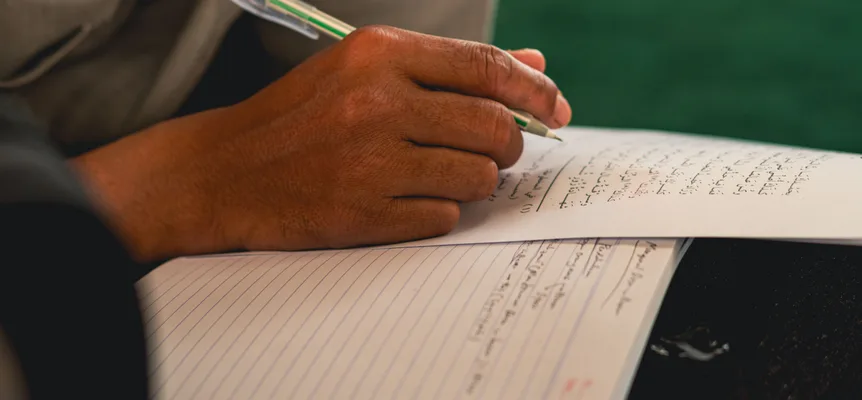
Arabic Grammar > Basic Arabic Sentences
A basic Arabic sentence takes one of two shapes: a noun sentence with no "is", like أَنَا طَالِبٌ (anā ṭālibun, I am a student), or a verb sentence, like أَشْرَبُ القَهْوَةَ (ashrabu l-qahwata, I drink coffee). The 50 sentences below, with English translations, teach seven patterns, each fully vowelled, glossed word by word, and given in Egyptian and Levantine.
Each sentence has two rows. The first is Modern Standard Arabic (MSA) with every vowel written, its transliteration and a word-by-word gloss that follows the Arabic word order. The second is how people say it in Egypt and in the Levant (Syria, Lebanon, Jordan, Palestine). Long vowels carry a line (ā ī ū), ʿ is the letter ع (ʿayn), ʾ is a glottal stop, and a dot under ḥ ṣ ḍ ṭ marks the heavy letters, the same scheme as our Arabic grammar map. The MSA transliteration spells out the case endings as written; in speech the last word drops its final vowel, so ṭālibun is said ṭālib. Spoken questions are addressed to a man. Spoken verb forms we were less sure of were checked against Wiktionary's South Levantine entries and the Lisaan Masry Egyptian dictionary. Last reviewed October 2026.
The seven patterns: X is Y, present-tense verbs, I have, questions, negation, want and can and the past tense.
1. "X is Y": sentences with no verb
Arabic has no word for "is" in the present tense. You put the subject next to its description and stop: هِيَ مُعَلِّمَةٌ (hiya muʿallimatun) is "she teacher", meaning she is a teacher.
| # | English | Arabic (MSA, vowelled) | Transliteration | Word by word |
|---|---|---|---|---|
| 1 | I am a student. | أَنَا طَالِبٌ | anā ṭālibun | I · student |
| Spoken | Egyptian أنا طالب ana ṭālib; Levantine أنا طالب ana ṭāleb | |||
| 2 | She is a teacher. | هِيَ مُعَلِّمَةٌ | hiya muʿallimatun | she · teacher (f.) |
| Spoken | Egyptian هي مدرّسة hiyya mudarrisa; Levantine هي معلّمة hiyye mʿallme | |||
| 3 | The room is small. | الغُرْفَةُ صَغِيرَةٌ | al-ghurfatu ṣaghīratun | the-room · small (f.) |
| Spoken | Egyptian الأوضة صغيّرة il-ʾōḍa ṣughayyara; Levantine الغرفة زغيرة il-ghurfe zghīre | |||
| 4 | The food is delicious. | الطَّعَامُ لَذِيذٌ | aṭ-ṭaʿāmu ladhīdhun | the-food · delicious |
| Spoken | Egyptian الأكل لذيذ il-akl lazīz; Levantine الأكل طيّب il-akl ṭayyeb | |||
| 5 | My brother is at home. | أَخِي فِي البَيْتِ | akhī fī l-bayti | my-brother · in · the-house |
| Spoken | Egyptian أخويا في البيت akhūya fi l-bēt; Levantine أخوي بالبيت akhūy bi-l-bēt | |||
| 6 | This is my book. | هٰذَا كِتَابِي | hādhā kitābī | this · my-book |
| Spoken | Egyptian ده كتابي da kitābi; Levantine هادا كتابي hāda ktābi | |||
| 7 | We are tired. | نَحْنُ مُتْعَبُونَ | naḥnu mutʿabūna | we · tired (pl.) |
| Spoken | Egyptian إحنا تعبانين iḥna taʿbanīn; Levantine نحنا تعبانين niḥna taʿbanīn | |||
| 8 | There is a cat in the garden. | فِي الحَدِيقَةِ قِطَّةٌ | fī l-ḥadīqati qiṭṭatun | in · the-garden · a-cat |
| Spoken | Egyptian فيه قطّة في الجنينة fīh ʾuṭṭa fi l-genēna; Levantine في بسّة بالجنينة fī bisse bi-l-jnēne | |||
The description agrees with the subject: غُرْفَة (ghurfa, room) is feminine, so small becomes ṣaghīratun, not ṣaghīrun. When the subject is indefinite, as in sentence 8, the place goes first and the thing after it. The pronouns that open sentences 1, 2 and 7 are all in our table of Arabic pronouns with their dialect forms, and the rule behind this pattern is set out under the two Arabic sentence types.
2. Verb sentences in the present tense
A verb sentence in MSA usually opens with the verb, and a verb in front of a plural subject stays singular. Sentence 13 says "loves the children chocolate" with a singular يُحِبُّ (yuḥibbu, he loves). Egyptian and Levantine speakers put the subject first and make the verb plural.
| # | English | Arabic (MSA, vowelled) | Transliteration | Word by word |
|---|---|---|---|---|
| 9 | I drink coffee every morning. | أَشْرَبُ القَهْوَةَ كُلَّ صَبَاحٍ | ashrabu l-qahwata kulla ṣabāḥin | I-drink · the-coffee · every · morning |
| Spoken | Egyptian باشرب قهوة كل يوم الصبح bashrab ʾahwa kull yōm iṣ-ṣubḥ; Levantine بشرب قهوة كل يوم الصبح bishrab ʾahwe kill yōm iṣ-ṣubḥ | |||
| 10 | My father works in a hospital. | يَعْمَلُ أَبِي فِي مُسْتَشْفًى | yaʿmalu abī fī mustashfan | works · my-father · in · a-hospital |
| Spoken | Egyptian أبويا بيشتغل في مستشفى abūya biyishtaghal fi mustashfa; Levantine بيّي بيشتغل بمستشفى bayyi byishtighil bi-mustashfa | |||
| 11 | My sister studies medicine. | تَدْرُسُ أُخْتِي الطِّبَّ | tadrusu ukhtī ṭ-ṭibba | studies · my-sister · the-medicine |
| Spoken | Egyptian أختي بتدرس طب ukhti bitidris ṭibb; Levantine إختي بتدرس طب ikhti btudrus ṭibb | |||
| 12 | We live near the sea. | نَسْكُنُ قُرْبَ البَحْرِ | naskunu qurba l-baḥri | we-live · near · the-sea |
| Spoken | Egyptian إحنا ساكنين جنب البحر iḥna saknīn gamb il-baḥr; Levantine نحنا ساكنين حدّ البحر niḥna sāknīn ḥadd il-baḥr | |||
| 13 | Children love chocolate. | يُحِبُّ الأَطْفَالُ الشُّوكُولَاتَةَ | yuḥibbu l-aṭfālu sh-shūkūlātata | loves · the-children · the-chocolate |
| Spoken | Egyptian العيال بيحبّوا الشوكولاتة il-ʿiyāl biyḥibbu sh-shukulāta; Levantine الولاد بيحبّوا الشوكولا il-wlād biḥibbu sh-shokola | |||
| 14 | I am reading a book now. | أَقْرَأُ الآنَ كِتَابًا | aqraʾu l-āna kitāban | I-read · now · a-book |
| Spoken | Egyptian باقرا كتاب دلوقتي baʾra kitāb dilwaʾti; Levantine عم إقرا كتاب هلّق ʿam iʾra ktāb halla | |||
| 15 | Ahmad goes to school by bus. | يَذْهَبُ أَحْمَدُ إِلَى المَدْرَسَةِ بِالحَافِلَةِ | yadhhabu aḥmadu ilā l-madrasati bi-l-ḥāfilati | goes · Ahmad · to · the-school · by-the-bus |
| Spoken | Egyptian أحمد بيروح المدرسة بالأتوبيس aḥmad biyrūḥ il-madrasa bi-l-utubīs; Levantine أحمد بيروح عالمدرسة بالباص aḥmad birūḥ ʿa-l-madrase bi-l-bāṣ | |||
| 16 | My mother is cooking dinner. | تَطْبُخُ أُمِّي العَشَاءَ | taṭbukhu ummī l-ʿashāʾa | cooks · my-mother · the-dinner |
| Spoken | Egyptian ماما بتطبخ العشا māma bituṭbukh il-ʿasha; Levantine إمّي عم تطبخ العشا immi ʿam tuṭbukh il-ʿasha | |||
Two prefixes do most of the work in speech. Egyptian and Levantine put b- or bi- on a present verb for habits (bashrab, I drink), and Levantine adds عم (ʿam) for something happening right now (ʿam iʾra, I am reading). MSA uses the same form for both. Our Arabic verb conjugation tables give every person of these verbs in the past and present.
3. "I have": ʿindī and its relatives
Arabic has no verb "to have". It says "at me is a question": عِنْدَ (ʿinda, at) plus a pronoun ending, so عِنْدِي (ʿindī) is "I have" and عِنْدَكَ (ʿindaka) is "you have".
| # | English | Arabic (MSA, vowelled) | Transliteration | Word by word |
|---|---|---|---|---|
| 17 | I have a question. | عِنْدِي سُؤَالٌ | ʿindī suʾālun | at-me · a-question |
| Spoken | Egyptian عندي سؤال ʿandi suʾāl; Levantine عندي سؤال ʿindi suʾāl | |||
| 18 | I have three children. | عِنْدِي ثَلَاثَةُ أَوْلَادٍ | ʿindī thalāthatu awlādin | at-me · three · children |
| Spoken | Egyptian عندي تلات عيال ʿandi talat ʿiyāl; Levantine عندي تلات ولاد ʿindi tlat wlād | |||
| 19 | Do you have a car? | هَلْ عِنْدَكَ سَيَّارَةٌ؟ | hal ʿindaka sayyāratun? | (question) · at-you · a-car |
| Spoken | Egyptian عندك عربية؟ ʿandak ʿarabiyya?; Levantine عندك سيارة؟ ʿindak sayyāra? | |||
| 20 | I don't have time. | لَيْسَ عِنْدِي وَقْتٌ | laysa ʿindī waqtun | not · at-me · time |
| Spoken | Egyptian معنديش وقت maʿandīsh waʾt; Levantine ما عندي وقت ma ʿindi waʾt | |||
| 21 | I had a dog. | كَانَ عِنْدِي كَلْبٌ | kāna ʿindī kalbun | was · at-me · a-dog |
| Spoken | Egyptian كان عندي كلب kān ʿandi kalb; Levantine كان عندي كلب kān ʿindi kalb | |||
Because ʿindī is not a verb, it borrows one for the past: كَانَ (kāna, was) in sentence 21. It is negated like a noun sentence, with laysa in MSA (sentence 20), and the thing you have stays in the nominative case: waqtun, not waqtan. Change the ending to change the owner: ʿindahu (he has), ʿindahā (she has), ʿindanā (we have).
4. Questions with question words
An Arabic question puts the question word first in MSA and keeps the rest of the sentence unchanged. A yes-or-no question adds هَلْ (hal) in front; speech drops hal and uses a rising voice.
| # | English | Arabic (MSA, vowelled) | Transliteration | Word by word |
|---|---|---|---|---|
| 22 | Where do you live? | أَيْنَ تَسْكُنُ؟ | ayna taskunu? | where · you-live |
| Spoken | Egyptian ساكن فين؟ sākin fēn?; Levantine وين ساكن؟ wēn sāken? | |||
| 23 | When does the lesson start? | مَتَى يَبْدَأُ الدَّرْسُ؟ | matā yabdaʾu d-darsu? | when · starts · the-lesson |
| Spoken | Egyptian الدرس بيبدأ إمتى؟ id-dars biyibdaʾ imta?; Levantine إيمتى بيبلّش الدرس؟ ēmta biballish id-dars? | |||
| 24 | How old are you? | كَمْ عُمْرُكَ؟ | kam ʿumruka? | how-much · your-age |
| Spoken | Egyptian عندك كام سنة؟ ʿandak kām sana?; Levantine قدّيش عمرك؟ ʾaddēsh ʿumrak? | |||
| 25 | Why are you learning Arabic? | لِمَاذَا تَتَعَلَّمُ العَرَبِيَّةَ؟ | limādhā tataʿallamu l-ʿarabiyyata? | why · you-learn · the-Arabic |
| Spoken | Egyptian بتتعلّم عربي ليه؟ bititʿallim ʿarabi lēh?; Levantine ليش عم تتعلّم عربي؟ lēsh ʿam titʿallam ʿarabi? | |||
| 26 | What do you want to eat? | مَاذَا تُرِيدُ أَنْ تَأْكُلَ؟ | mādhā turīdu an taʾkula? | what · you-want · that · you-eat |
| Spoken | Egyptian عايز تاكل إيه؟ ʿāyiz tākul ēh?; Levantine شو بدّك تاكل؟ shū baddak tākul? | |||
| 27 | Who is this man? | مَنْ هٰذَا الرَّجُلُ؟ | man hādhā r-rajulu? | who · this · the-man |
| Spoken | Egyptian مين الراجل ده؟ mīn ir-rāgil da?; Levantine مين هالزلمة؟ mīn haz-zalame? | |||
| 28 | How do you get to work? | كَيْفَ تَذْهَبُ إِلَى العَمَلِ؟ | kayfa tadhhabu ilā l-ʿamali? | how · you-go · to · the-work |
| Spoken | Egyptian بتروح الشغل إزاي؟ bitrūḥ ish-shughl izzāy?; Levantine كيف بتروح عالشغل؟ kīf bitrūḥ ʿa-sh-shighl? | |||
| 29 | Are you hungry? | هَلْ أَنْتَ جَائِعٌ؟ | hal anta jāʾiʿun? | (question) · you · hungry |
| Spoken | Egyptian إنت جعان؟ inta gaʿān?; Levantine إنت جوعان؟ inte jūʿān? | |||
Egyptian moves most question words to the end of the sentence: فين (fēn, where), إمتى (imta, when), ليه (lēh, why), إزاي (izzāy, how) and إيه (ēh, what). Levantine usually keeps them at the front, as MSA does. Sentence 24 shows that "how old" is a fixed frame rather than a word-for-word match: MSA asks "how much is your age", Egyptian asks "how many years do you have".
5. Negation: lā, laysa, mā and lam
MSA picks the word for "not" by what comes after it. لَا (lā) goes before a present verb, لَمْ (lam) before a shortened present verb to mean "did not", مَا (mā) before a past verb, and لَيْسَ (laysa) in a sentence with no verb.
| # | English | Arabic (MSA, vowelled) | Transliteration | Word by word |
|---|---|---|---|---|
| 30 | I don't drink coffee. | لَا أَشْرَبُ القَهْوَةَ | lā ashrabu l-qahwata | not · I-drink · the-coffee |
| Spoken | Egyptian مابشربش قهوة ma-bashrabsh ʾahwa; Levantine ما بشرب قهوة ma bishrab ʾahwe | |||
| 31 | Nobody knows. | لَا يَعْرِفُ أَحَدٌ | lā yaʿrifu aḥadun | not · knows · anyone |
| Spoken | Egyptian محدّش يعرف maḥaddish yiʿraf; Levantine ما حدا بيعرف ma ḥada byiʿrif | |||
| 32 | Don't worry. | لَا تَقْلَقْ | lā taqlaq | don't · you-worry |
| Spoken | Egyptian ما تقلقش ma-tiʾlaʾsh; Levantine لا تقلق la tiʾlaʾ | |||
| 33 | It isn't hot today. | لَيْسَ الجَوُّ اليَوْمَ حَارًّا | laysa l-jawwu l-yawma ḥārran | is-not · the-weather · today · hot |
| Spoken | Egyptian الجو مش حرّ النهارده ig-gaww mish ḥarr innahārda; Levantine الدنيا مش شوب اليوم id-dinye mish shōb il-yōm | |||
| 34 | I'm not sure. | لَسْتُ مُتَأَكِّدًا | lastu mutaʾakkidan | I-am-not · sure |
| Spoken | Egyptian مش متأكّد mish mitʾakkid; Levantine مش متأكّد mish mitʾakkid | |||
| 35 | I didn't sleep well. | لَمْ أَنَمْ جَيِّدًا | lam anam jayyidan | did-not · I-sleep · well |
| Spoken | Egyptian ما نمتش كويّس ma-nimtish kwayyis; Levantine ما نمت منيح ma nimt mnīḥ | |||
| 36 | The train hasn't arrived yet. | لَمْ يَصِلِ القِطَارُ بَعْدُ | lam yaṣili l-qiṭāru baʿdu | did-not · arrive · the-train · yet |
| Spoken | Egyptian القطر لسّه ما وصلش il-ʾaṭr lissa ma-wṣilsh; Levantine القطار لسّا ما وصل il-ʾiṭār lissa ma wiṣil | |||
| 37 | I didn't see him. | مَا رَأَيْتُهُ | mā raʾaytuhu | not · I-saw-him |
| Spoken | Egyptian ما شفتوش ma-shuftūsh; Levantine ما شفتو ma shiftu | |||
Laysa changes with its subject: lastu is "I am not", laysa is "he is not". Sentences 35 and 37 both mean "did not"; lam is the form textbooks teach first. Speech is simpler. Egyptian puts ma- before a verb and -sh after it (ma-bashrabsh), and Levantine uses ma alone. Both use مش (mish) before anything that is not a verb (mish mitʾakkid). The full set of five MSA negators, with lan for the future, is in the negation table on our grammar map.
6. "I want" and "I can"
In MSA, "want" and "can" are verbs followed by أَنْ (an, that) and a second verb: أُرِيدُ أَنْ (urīdu an, I want to) and أَسْتَطِيعُ أَنْ (astaṭīʿu an, I can). The second verb takes the subjunctive, which changes its last vowel from -u to -a.
| # | English | Arabic (MSA, vowelled) | Transliteration | Word by word |
|---|---|---|---|---|
| 38 | I want to learn Arabic. | أُرِيدُ أَنْ أَتَعَلَّمَ العَرَبِيَّةَ | urīdu an ataʿallama l-ʿarabiyyata | I-want · that · I-learn · the-Arabic |
| Spoken | Egyptian عايز أتعلّم عربي ʿāyiz atʿallim ʿarabi; Levantine بدّي إتعلّم عربي baddi itʿallam ʿarabi | |||
| 39 | I'd like a glass of water. | أُرِيدُ كُوبًا مِنَ المَاءِ | urīdu kūban mina l-māʾi | I-want · a-glass · of · the-water |
| Spoken | Egyptian عايز كوباية ميّة ʿāyiz kubbāyit mayya; Levantine بدّي كاسة مي baddi kāset mayy | |||
| 40 | Do you want to come with us? | هَلْ تُرِيدُ أَنْ تَأْتِيَ مَعَنَا؟ | hal turīdu an taʾtiya maʿanā? | (question) · you-want · that · you-come · with-us |
| Spoken | Egyptian عايز تيجي معانا؟ ʿāyiz tīgi maʿāna?; Levantine بدّك تيجي معنا؟ baddak tīji maʿna? | |||
| 41 | We want a room for two. | نُرِيدُ غُرْفَةً لِشَخْصَيْنِ | nurīdu ghurfatan li-shakhṣayni | we-want · a-room · for-two-people |
| Spoken | Egyptian عايزين أوضة لاتنين ʿayzīn ʾōḍa li-tnēn; Levantine بدنا غرفة لشخصين baddna ghurfe la-shakhṣēn | |||
| 42 | I can read Arabic. | أَسْتَطِيعُ أَنْ أَقْرَأَ العَرَبِيَّةَ | astaṭīʿu an aqraʾa l-ʿarabiyyata | I-can · that · I-read · the-Arabic |
| Spoken | Egyptian أقدر أقرا عربي aʾdar aʾra ʿarabi; Levantine بقدر إقرا عربي biʾdar iʾra ʿarabi | |||
| 43 | I can't sleep. | لَا أَسْتَطِيعُ أَنْ أَنَامَ | lā astaṭīʿu an anāma | not · I-can · that · I-sleep |
| Spoken | Egyptian مش قادر أنام mish ʾādir anām; Levantine ما بقدر نام ma biʾdar nām | |||
| 44 | Can I sit here? | هَلْ يُمْكِنُنِي أَنْ أَجْلِسَ هُنَا؟ | hal yumkinunī an ajlisa hunā? | (question) · is-it-possible-for-me · that · I-sit · here |
| Spoken | Egyptian ممكن أقعد هنا؟ mumkin aʾʿud hina?; Levantine فيني إقعد هون؟ fīni iʾʿud hōn? | |||
Neither dialect uses the MSA verbs here. Egyptian "want" is عايز (ʿāyiz), an adjective that changes for a woman (ʿayza) and for a group (ʿayzīn). Levantine "want" is بدّ (badd) plus a pronoun ending: baddi, baddak, baddna. The second verb in speech has no an and no subjunctive ending. Egyptian negates "can" with mish and the adjective ʾādir, able (sentence 43), or with the verb: ma-ʾdarsh.
7. Past-tense sentences
The Arabic past tense is the verb stem plus an ending for the person: -tu for "I", -nā for "we", -at for "she". ذَهَبْتُ (dhahabtu) is "I went", أَكَلْنَا (akalnā) is "we ate". Egyptian and Levantine keep the endings and lose most of the vowels: -t, -na, and -it in Egyptian or -et in Levantine.
| # | English | Arabic (MSA, vowelled) | Transliteration | Word by word |
|---|---|---|---|---|
| 45 | I went to the market yesterday. | ذَهَبْتُ إِلَى السُّوقِ أَمْسِ | dhahabtu ilā s-sūqi amsi | I-went · to · the-market · yesterday |
| Spoken | Egyptian رحت السوق إمبارح ruḥt is-sūʾ imbāriḥ; Levantine رحت عالسوق مبارح riḥt ʿa-s-sūʾ mbāriḥ | |||
| 46 | We ate at a Lebanese restaurant. | أَكَلْنَا فِي مَطْعَمٍ لُبْنَانِيٍّ | akalnā fī maṭʿamin lubnāniyyin | we-ate · in · a-restaurant · Lebanese |
| Spoken | Egyptian كلنا في مطعم لبناني kalna fi maṭʿam lubnāni; Levantine أكلنا بمطعم لبناني akalna bi-maṭʿam libnāni | |||
| 47 | My sister arrived from London. | وَصَلَتْ أُخْتِي مِنْ لَنْدَنَ | waṣalat ukhtī min landana | arrived (she) · my-sister · from · London |
| Spoken | Egyptian أختي وصلت من لندن ukhti wiṣlit min landan; Levantine إختي وصلت من لندن ikhti wiṣlet min landan | |||
| 48 | We watched a good film. | شَاهَدْنَا فِيلْمًا جَمِيلًا | shāhadnā fīlman jamīlan | we-watched · a-film · beautiful |
| Spoken | Egyptian شفنا فيلم حلو shufna film ḥilw; Levantine حضرنا فيلم حلو ḥḍirna film ḥilu | |||
| 49 | The weather was nice. | كَانَ الطَّقْسُ جَمِيلًا | kāna ṭ-ṭaqsu jamīlan | was · the-weather · beautiful |
| Spoken | Egyptian الجو كان حلو ig-gaww kān ḥilw; Levantine الطقس كان حلو iṭ-ṭaʾs kān ḥilu | |||
| 50 | I forgot my key. | نَسِيتُ مِفْتَاحِي | nasītu miftāḥī | I-forgot · my-key |
| Spoken | Egyptian نسيت مفتاحي nisīt muftāḥi; Levantine نسيت مفتاحي nsīt miftāḥi | |||
In sentence 47 the verb comes first and still marks the subject as female: waṣalat, not waṣala. Sentence 49 is sentence 3's pattern moved into the past. Once كَانَ (kāna) appears, the description takes -an: jamīlan, not jamīlun.
How to build new sentences from these 50
Keep the frame and swap one word. Put a noun where a noun was, or a verb where a verb was, and the rest of the sentence stays as it is. The one thing to watch is gender: a feminine noun needs a feminine adjective.
- Sentence 17, عِنْدِي سُؤَالٌ (ʿindī suʾālun, I have a question), becomes عِنْدِي فِكْرَةٌ (ʿindī fikratun, I have an idea).
- Sentence 38, أُرِيدُ أَنْ أَتَعَلَّمَ (urīdu an ataʿallama, I want to learn), takes the verb from sentence 43 and becomes أُرِيدُ أَنْ أَنَامَ (urīdu an anāma, I want to sleep).
- Sentence 22, أَيْنَ تَسْكُنُ؟ (ayna taskunu, where do you live?), becomes أَيْنَ تَعْمَلُ؟ (ayna taʿmalu, where do you work?) with the verb from sentence 10.
The fastest supply of words to swap in is our 100 most common Arabic words. Greetings, thanks and other set expressions do not follow these patterns and are better learned whole: they are on our common Arabic phrases page in MSA, Levantine and Egyptian. I drilled grammar rules with Anki flashcards and, as I wrote in my account of learning Arabic as an adult, should have been working on speaking at the same time. A card per sentence, with the MSA row on one side and your dialect row on the other, does both. If you are not sure which of the seven patterns you already control, the free Arabic level test shows where you stand.
Four mistakes that break a basic Arabic sentence
Each of these four breaks one of the patterns above, and three of them come straight from English grammar.
- Don't add a word for "is". A simple sentence like الغُرْفَةُ صَغِيرَةٌ (al-ghurfatu ṣaghīratun, the room is small) needs nothing between the two words.
- Don't make an MSA verb plural when it comes before a plural subject. Write yuḥibbu l-aṭfālu (sentence 13), not yuḥibbūna l-aṭfālu. In speech the subject comes first and the verb is plural, so the problem goes away.
- Don't put laysa in front of a verb. Textbook MSA negates a present verb with lā (sentence 30) and keeps laysa for sentences with no verb (sentence 33).
- Don't forget gender. A feminine subject needs a feminine description and verb: ṣaghīratun in sentence 3, waṣalat in sentence 47.
Pick one dialect for the spoken rows and stay with it. Our six-month Egyptian Arabic learning path and our comparison of Levantine Arabic courses take it from there.
Frequently asked questions
How do you create a short sentence in Arabic?
Put a subject next to a description and you have a sentence, because Arabic has no present-tense word for is. أنا طالب (anā ṭālib) means I am a student, word for word I student. For an action, start with the verb: أشرب القهوة (ashrabu l-qahwa), I drink coffee. Learn one frame per pattern and swap single words into it.
What is the basic sentence structure in Arabic?
Arabic has two sentence types. A nominal sentence starts with a noun or pronoun and has no verb in the present: الغرفة صغيرة (al-ghurfa ṣaghīra), the room is small. A verbal sentence starts with a verb, in the order verb, subject, object in Modern Standard Arabic. Egyptian and Levantine speakers mostly put the subject first.
How do you say I have in Arabic?
Arabic has no verb to have. It uses عند (ʿinda, at) plus a pronoun ending, so عندي (ʿindī, at me) means I have: ʿindī suʾāl is I have a question. Egyptians say ʿandi and Levantine speakers say ʿindi. Negate it with laysa ʿindī in Modern Standard Arabic, maʿandīsh in Egyptian and ma ʿindi in Levantine.
How do you make a sentence negative in Arabic?
Modern Standard Arabic picks the negator by what follows it: lā before a present verb, lam before a shortened present verb to mean did not, mā before a past verb, and laysa in a sentence with no verb. Egyptian wraps the verb in ma- and -sh, Levantine puts ma in front, and both use mish before anything that is not a verb.
Should I learn Arabic sentences in Modern Standard Arabic or a dialect?
Learn the Modern Standard Arabic frame if you need to read, and the spoken version if you need to talk. The seven patterns are the same either way. The spoken versions drop the case endings and use different words for want, can and now, which is why every sentence on this page shows both.