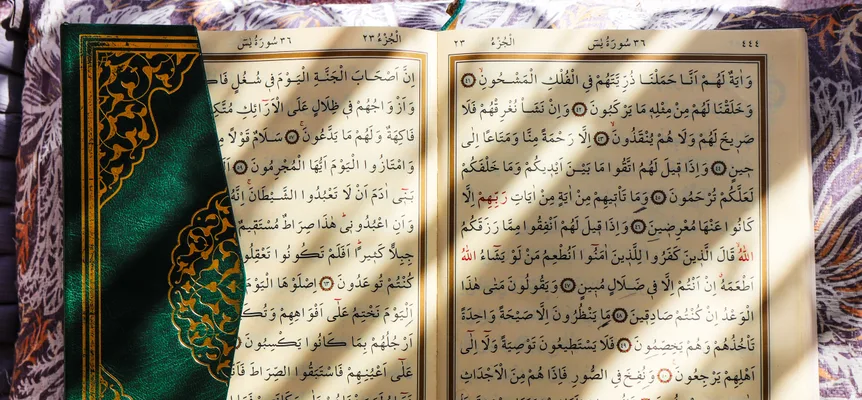
The 100 most common words in the Quran account for 42,900 of its 77,429 words, which is 55.4 percent of the whole text. The list is led by مِن (min, from) at 3,226 occurrences and اللَّه (Allah) at 2,699. Every count on this page comes from the Quranic Arabic Corpus.
The table below ranks those hundred words in order, with the Arabic under full vowel marks, a transliteration, a meaning, the trilateral root where the word has one, and an exact occurrence count. The counts are not estimates. They come from the Quranic Arabic Corpus at corpus.quran.com, the word-by-word morphological analysis of the Quran built by Kais Dukes, and each one can be checked against that site's own dictionary pages.
How to read the transliteration. One scheme is used throughout, the same one as on our table of common Arabic phrases in three dialects. Four symbols in it are worth knowing before you start.
| Symbol | Arabic letter | How to say it |
|---|---|---|
| kh | خ | the ch of Scottish loch |
| gh | غ | a gargled r |
| ʿ | ع | a squeeze in the throat, with no English equivalent |
| ʾ | ء | a glottal stop, the catch in the middle of uh-oh |
Beyond those, ث is th, ذ is dh, ش is sh, and ظ is written z. The emphatic letters carry no dots underneath, and long vowels are not marked, because the Arabic column has full harakat and shows you both. If the vowel marks themselves are new, our guide to Arabic diacritics and how they work explains what each one does.
The 100 most common words in the Quran
The hundred most common words in the Quran run from مِن (min, from) at 3,226 occurrences down to سَأَلَ (saʾala, he asked) at 106. About a third of them have no root at all: prepositions, particles, relative pronouns, the negatives, and one proper noun. The rest are nouns and verbs, and each of those carries a root that brings a family of other words with it.
| Rank | Arabic | Transliteration | Meaning | Root | Occurrences |
|---|---|---|---|---|---|
| 1 | مِن | min | from, of, some of | — | 3,226 |
| 2 | اللَّه | Allah | God | أ ل ه | 2,699 |
| 3 | مَا | ma | what, that which; also the negative "not" | — | 2,565 |
| 4 | لَا | la | no, not | — | 1,742 |
| 5 | فِي | fi | in, inside | — | 1,701 |
| 6 | إِنَّ | inna | indeed, truly | — | 1,682 |
| 7 | قَالَ | qala | he said | ق و ل | 1,618 |
| 8 | الَّذِي | alladhi | who, which (relative pronoun) | — | 1,468 |
| 9 | عَلَى | ʿala | on, upon, against | — | 1,445 |
| 10 | كَانَ | kana | he was, it was | ك و ن | 1,358 |
| 11 | ذَا | dha | this, that (the stem inside هٰذَا, ذٰلِكَ, أُولٰئِكَ) | — | 1,058 |
| 12 | رَبّ | rabb | lord, master | ر ب ب | 975 |
| 13 | مَن | man | who, whoever | — | 871 |
| 14 | إِلَى | ila | to, towards | — | 742 |
| 15 | إِن | in | if | — | 703 |
| 16 | إِلَّا | illa | except, unless | — | 659 |
| 17 | أَن | an | that, to (before a verb) | — | 616 |
| 18 | آمَنَ | amana | he believed | أ م ن | 537 |
| 19 | يَوْم | yawm | day | ي و م | 475 |
| 20 | عَن | ʿan | from, about, away from | — | 465 |
| 21 | أَرْض | ard | earth, land | أ ر ض | 461 |
| 22 | إِذَا | idha | when, whenever | — | 423 |
| 23 | قَد | qad | indeed, already | — | 406 |
| 24 | قَوْم | qawm | a people, a community | ق و م | 383 |
| 25 | عَلِمَ | ʿalima | he knew | ع ل م | 382 |
| 26 | آيَة | aya | sign, verse | أ ي ي | 382 |
| 27 | أَنَّ | anna | that (introducing a clause) | — | 362 |
| 28 | كُلّ | kull | every, all | ك ل ل | 359 |
| 29 | لَم | lam | did not | — | 348 |
| 30 | جَعَلَ | jaʿala | he made, he placed | ج ع ل | 340 |
| 31 | ثُمَّ | thumma | then, afterwards | — | 338 |
| 32 | رَسُول | rasul | messenger | ر س ل | 332 |
| 33 | عَذَاب | ʿadhab | punishment, torment | ع ذ ب | 322 |
| 34 | سَمَاء | samaʾ | sky, heaven | س م و | 310 |
| 35 | إِذ | idh | when (of the past) | — | 309 |
| 36 | نَفْس | nafs | soul, self | ن ف س | 295 |
| 37 | كَفَرَ | kafara | he disbelieved | ك ف ر | 289 |
| 38 | شَيْء | shayʾ | thing | ش ي أ | 283 |
| 39 | أَو | aw | or | — | 280 |
| 40 | جَاءَ | jaʾa | he came | ج ي أ | 278 |
| 41 | عَمِلَ | ʿamila | he did, he worked | ع م ل | 276 |
| 42 | آتَى | ata | he gave (form IV) | أ ت ي | 271 |
| 43 | رَأَى | raʾa | he saw | ر أ ي | 271 |
| 44 | بَيْن | bayn | between | ب ي ن | 266 |
| 45 | أَتَى | ata | he came (form I) | أ ت ي | 264 |
| 46 | كِتَاب | kitab | book, scripture | ك ت ب | 260 |
| 47 | حَقّ | haqq | truth, right | ح ق ق | 247 |
| 48 | قَبْل | qabl | before | ق ب ل | 242 |
| 49 | نَاس | nas | people, mankind | ن و س | 241 |
| 50 | شَاءَ | shaʾa | he willed, he wished | ش ي أ | 236 |
| 51 | أَيّ | ayy | which, whichever | — | 215 |
| 52 | مُؤْمِن | muʾmin | believer | أ م ن | 202 |
| 53 | لَو | law | if (of something that did not happen) | — | 201 |
| 54 | بَعْد | baʿd | after | ب ع د | 199 |
| 55 | عِنْد | ʿind | with, at, in the sight of | ع ن د | 197 |
| 56 | خَلَقَ | khalaqa | he created | خ ل ق | 184 |
| 57 | أَنْزَلَ | anzala | he sent down | ن ز ل | 183 |
| 58 | خَيْر | khayr | good, better | خ ي ر | 178 |
| 59 | كَذَّبَ | kadhdhaba | he denied, he called it a lie | ك ذ ب | 176 |
| 60 | سَبِيل | sabil | way, path | س ب ل | 176 |
| 61 | دَعَا | daʿa | he called, he prayed | د ع و | 170 |
| 62 | اتَّقَى | ittaqa | he was mindful of God | و ق ي | 166 |
| 63 | أَمْر | amr | matter, command | أ م ر | 166 |
| 64 | لَمَّا | lamma | when; not yet | — | 165 |
| 65 | مَعَ | maʿa | with | — | 164 |
| 66 | عَلِيم | ʿalim | all-knowing | ع ل م | 163 |
| 67 | بَعْض | baʿd | some, part of | ب ع ض | 157 |
| 68 | كَافِر | kafir | disbeliever | ك ف ر | 156 |
| 69 | ذُو | dhu | possessor of, owner of | — | 156 |
| 70 | آخِر | akhir | last, final; the hereafter | أ خ ر | 155 |
| 71 | غَيْر | ghayr | other than, not | غ ي ر | 147 |
| 72 | جَنَّة | janna | garden, paradise | ج ن ن | 147 |
| 73 | إِلَٰه | ilah | a god, a deity | أ ل ه | 147 |
| 74 | نَار | nar | fire | ن و ر | 145 |
| 75 | هَدَى | hada | he guided | ه د ي | 144 |
| 76 | دُون | dun | besides, apart from | د و ن | 144 |
| 77 | حَتَّى | hatta | until | — | 142 |
| 78 | أَرَادَ | arada | he wanted, he intended | ر و د | 139 |
| 79 | أَم | am | or (in a question) | — | 137 |
| 80 | مُوسَى | Musa | Moses | — | 136 |
| 81 | اتَّبَعَ | ittabaʿa | he followed | ت ب ع | 136 |
| 82 | قَلْب | qalb | heart | ق ل ب | 132 |
| 83 | عَبْد | ʿabd | servant, slave | ع ب د | 131 |
| 84 | أَرْسَلَ | arsala | he sent | ر س ل | 130 |
| 85 | لَعَلَّ | laʿalla | perhaps, so that | — | 129 |
| 86 | ظَالِم | zalim | wrongdoer | ظ ل م | 129 |
| 87 | أَخَذَ | akhadha | he took | أ خ ذ | 127 |
| 88 | بَل | bal | rather, on the contrary | — | 127 |
| 89 | أَهْل | ahl | people of, family of | أ ه ل | 127 |
| 90 | اتَّخَذَ | ittakhadha | he took for himself, he adopted | أ خ ذ | 124 |
| 91 | عَبَدَ | ʿabada | he worshipped | ع ب د | 122 |
| 92 | يَد | yad | hand | ي د ي | 120 |
| 93 | مُبِين | mubin | clear, plain | ب ي ن | 119 |
| 94 | رَحِيم | rahim | merciful | ر ح م | 116 |
| 95 | دُنْيَا | dunya | this world | د ن و | 115 |
| 96 | رَحْمَة | rahma | mercy | ر ح م | 114 |
| 97 | ظَلَمَ | zalama | he wronged | ظ ل م | 110 |
| 98 | عَظِيم | ʿazim | great, mighty | ع ظ م | 107 |
| 99 | لَن | lan | will never | — | 106 |
| 100 | سَأَلَ | saʾala | he asked | س أ ل | 106 |
Ranks 99, 100 and 101 all sit at 106 occurrences. وَجَدَ (wajada, he found) is the one that falls outside the hundred, and the cut between it and سَأَلَ is arbitrary. Learn both.
How much of the Quran a hundred words covers
The hundred words above account for 42,900 of the Quran's 77,429 words, or 55.4 percent of the text. Coverage climbs steeply at first and then flattens: 25 words already carry more than a third of the Quran, while the jump from 400 words to 500 buys under three percentage points.
| Words learned | Words of the Quran covered | Share of the text |
|---|---|---|
| 25 | 28,225 | 36.5% |
| 50 | 35,536 | 45.9% |
| 100 | 42,900 | 55.4% |
| 200 | 50,296 | 65.0% |
| 300 | 54,773 | 70.7% |
| 400 | 57,858 | 74.7% |
| 500 | 60,092 | 77.6% |
| 600 | 61,791 | 79.8% |
That last line is where the booklets called 80% of Quranic Words get their title. Eighty percent lands at about 600 words. A word counts as covered here when its stem is one you have learned, so يَعْلَمُونَ (yaʿlamun, they know) counts once you know عَلِمَ. Coverage is not comprehension. The words you have not learned are the ones carrying most of the meaning, so 55 percent of the words on the page is nowhere near 55 percent of the sense. The gain is a different one: at a hundred words the page stops being a wall of unfamiliar shapes, and you start reading instead of decoding.
How to use this list
Learn the top 20 first, and learn them inside sentences rather than on flashcards. Almost all of them are function words, and a function word has no clean English equivalent to memorize: مِن is from, of, or some of depending on what follows it, and مَا is both what and not. The short suras at the end of the Quran are the cheapest place to meet them.
After that, work by root rather than down the ranking. Ranks 25 and 66 sit forty-one places apart, but عَلِمَ (he knew) and عَلِيم (all-knowing) are the same three letters, ع ل م. Learn the root once and both come free, along with عِلْم (knowledge), which occurs 105 times and misses this table by two places. The 99 names of God are the densest practice ground for this, and our table of the 99 names of Allah with their roots pairs each name with an everyday word built from the same three letters.
Verbs repay the most work. قَالَ alone appears 1,618 times, and the count covers every form of it, so learning how one Arabic verb inflects gets you all of them at once. Our guide to Arabic verb conjugation and the ten verb forms is the fastest way to stop treating قُلْ, قَالُوا and يَقُولُ as three unrelated words.
What the counts include, and where they come from
Every number on this page is a lemma count from the Quranic Arabic Corpus: the dictionary word, summed over all of its inflected forms. The 1,618 for قَالَ therefore includes قُلْ, قَالُوا and يَقُولُ. We checked 21 of these counts one by one against the corpus's own Quranic Dictionary pages, across the whole range of the table, and all 21 matched exactly. Anything we could not verify was left out. Most of the Quranic word lists in circulation are PDFs and scans that print a number without saying where it came from, and a number a reader cannot check is worth very little on a page like this. The percentages in the coverage table are ours, worked out from the same corpus data; the occurrence counts are the corpus's.
Five short prefixes are left out of the ranking on purpose, because they attach to other words rather than standing alone: وَ (wa-, and) at 9,594, الـ (al-, the) at 8,377, لِـ (li-, for) at 3,847, فَـ (fa-, so) at 3,001 and بِـ (bi-, with) at 2,544. The first three outrank every word in the table. You learn them as grammar rather than as vocabulary, which is why frequency lists usually leave them out.
Three entries need a note. مَا at rank 3 merges two different words spelled identically, the relative and interrogative ma at 1,592 and the negative ma at 973. يَوْم at rank 19 is 405 occurrences tagged as a noun plus 70 tagged as the time adverb yawma. And root attribution follows the corpus, which files نَاس under ن و س rather than the أ ن س some dictionaries give it.
Related Arabic references
This page is one of several under our guide to learning to read the Quran in Arabic, which compares the free and paid tools for doing it and says which ones we think are worth the time. For the fixed expressions that surround Quranic Arabic in daily speech, see Islamic phrases in Arabic and when to say them, which gives each phrase with its expected reply. If you want the Arabic text alongside English while you work through this vocabulary, our comparison of Quran editions with English translation covers the printed and online options.
Frequently asked questions
What are the 500 most frequently used words in the Quran?
There is no single canonical list of 500. The number comes from ranking every word in the Quran by how often it occurs, and the top 500 of that ranking cover 60,092 of the Quran's 77,429 words, or 77.6 percent of the text. The first 100 of the same ranking are in the table on this page, and they alone cover 55.4 percent.
What are the 400 most common words in the Quran?
Ranked by frequency in the Quranic Arabic Corpus, the top 400 words account for 57,858 of the Quran's 77,429 words, which is 74.7 percent. Going from 400 words to 500 adds only about three percentage points. That flattening is why most Quranic vocabulary courses stop somewhere between 300 and 600 words.
Which word is used 365 times in the Quran?
No word is. The claim is normally made about يوم (yawm, day), and it does not survive a check against the corpus, which records yawm 475 times: 405 tagged as the noun and 70 more as the time adverb yawma. The companion claim that شهر (shahr, month) occurs 12 times is wrong too. It occurs 21 times.
How many words are in the Quran?
77,429, counting each written word once, in the morphological analysis published by the Quranic Arabic Corpus. Higher and lower totals circulate because Arabic attaches short words to the front and back of others. The wa- of walillah is a meaningful word but not a separate written one, so the counting rule you pick changes the answer.
What is the most common word in the Quran?
Among words that stand on their own, من (min, from) at 3,226 occurrences, ahead of الله (Allah) at 2,699. Counting the short prefixes that attach to other words changes the answer: و (wa-, and) occurs 9,594 times and ال (al-, the) 8,377 times, both more often than any standalone word.